Insights from our experts
Mar 2
Understanding Credit Scores: The Key to Better Loans
Your credit score is a three-digit number that represents your creditworthiness, acting as a snapshot of your reliability as a borrower based on your repayment history.
Lenders—including banks, credit card issuers, and even some landlords—use this score to determine the level of risk involved in lending you money or entering into a contract.
The score is typically influenced by five key factors: payment history, the amount of debt you owe (credit utilization), the length of your credit history, the types of credit you use, and recent inquiries for new credit.
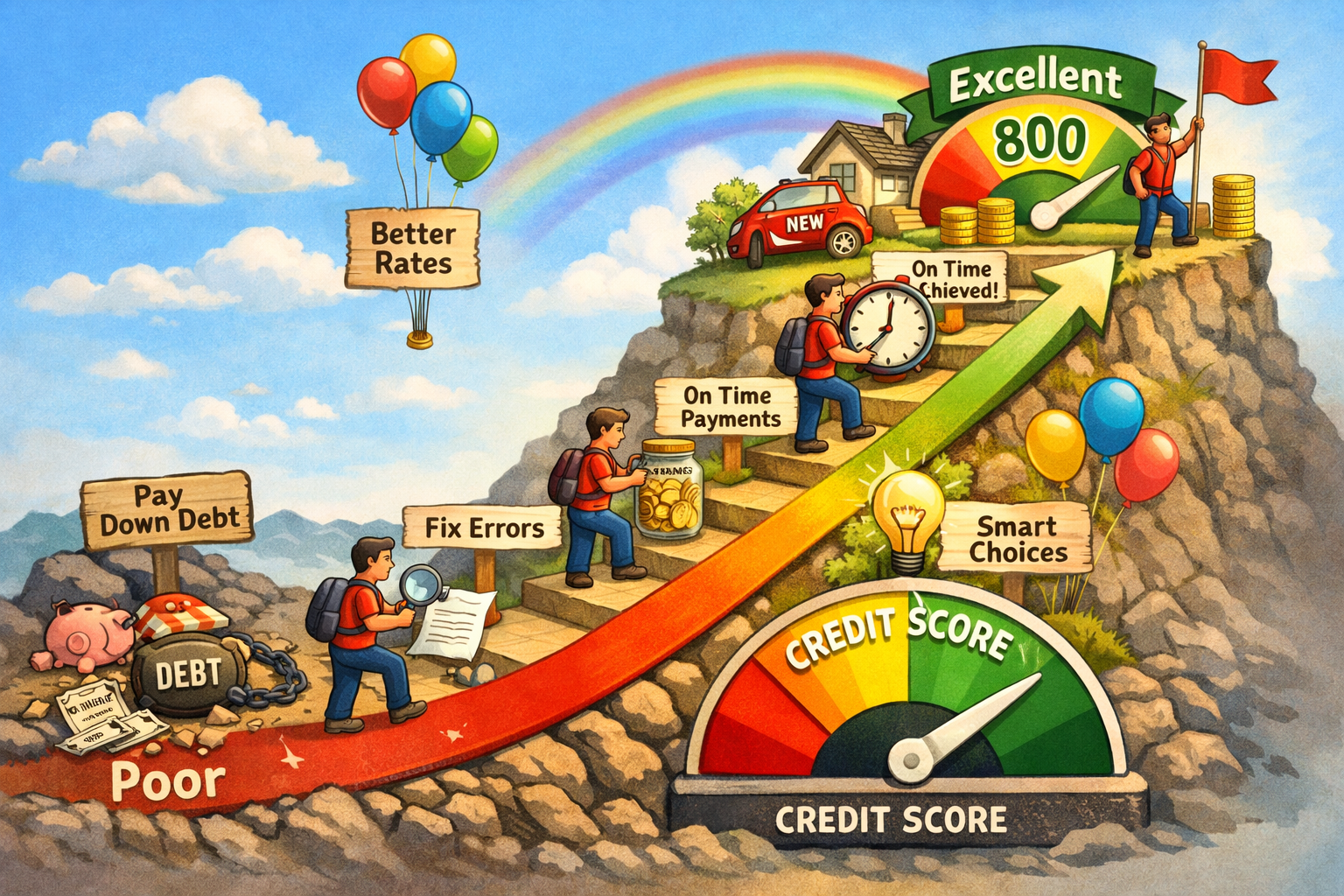
Maintaining a high score is the most effective way to secure lower interest rates, which can save you tens of thousands of dollars over the life of a mortgage or auto loan.
To improve your standing, focus on making every payment on time and keeping your credit card balances well below their limits—ideally under 30% of your available credit.
Regularly monitoring your credit report for errors is also vital, as disputing inaccuracies can provide a quick and legitimate boost to your overall score.
Other topics
Stay informed with our latest financial insights and guides.